Pages

03 November 2017

Pond garden spring 2017.


Our regular visitor, he is a non-native sika deer, doesn't do too much damage but he tests my degree of non-attachment and loving kindness! He likes to rub his antlers on the bark of young trees, removing their bark. This stunts the trees severely and sometimes kills them. He also breaks branches when eating leaves, but mostly it is the young shoots in spring that he eats and the trees can recover from this.

Perhaps he thinks he is invisible standing behind the apple tree and although he will run off when we come near, he is surprisingly brazen.

 Magpie pecking at his antlers. He is not just one, Tivon counted 8 Sika Deer in the next field and I expect there are not just 8 either.

Sarcoscypha coccinea, the scarlet elf cup, scores of these carpeted a damp area near the big pond.

Frost on the bank of the big pond... and reflections.

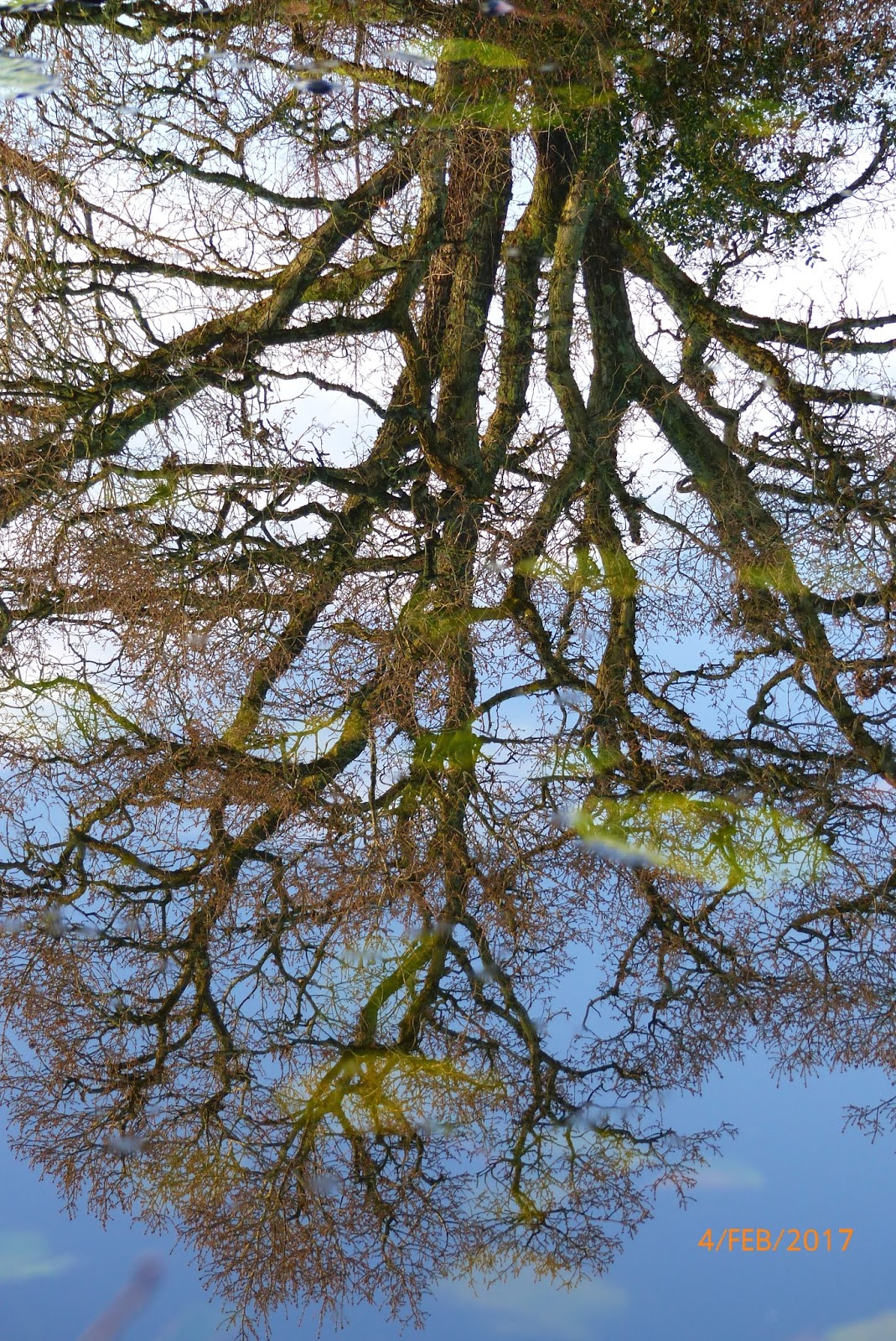
Reflection of oak.

Cornus reflected in the big pond on a frosty morning.

February Reflections in the big pond.
(No the photo isn't upside down!).

Growing near the big pond... Salix chaenomeloides "Mt Aso".

Chimonanthus, wintersweet.

Trillium.

Erythronium.

Fresh new growth of Schefflera brevipedunculata.

  Equisetum arvense, Horsetail was growing in the garden before it even was a garden. Many, if not most, gardeners consider it to be terrible weed but we have been living with it in harmony for almost 20 years, this is a plant that I respect!
 ...Isn't it handsome!
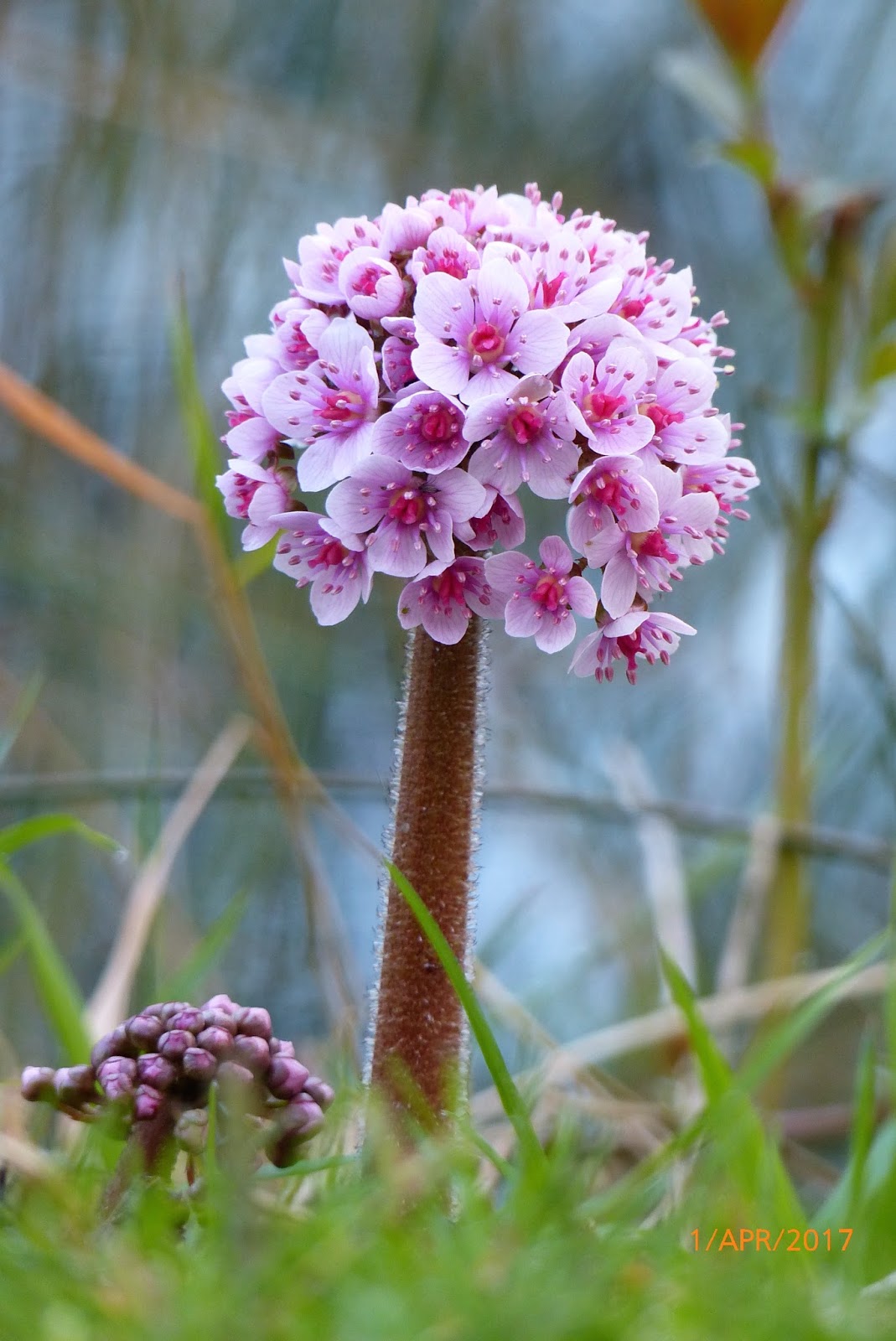
 Darmera peltata.

Magnolia Rostrata.

Native Primrose.

 Tivons turkey and one of the hens on the meadow with primroses.

A hail shower on 25th April.

02 November 2017

Snowdrops, Magnolia and other spring bee plants 2017.


Magnolias are not usually noted for providing forage for bees but this small tree was buzzing for a few warm days in March...

Magnolia × loebneri 'Leonard Messel'.

Honeybee with yellow pollen basket, March 26th.

Honeybees and bumble bees were collecting pollen from this Magnolia.

Magnolia × loebneri 'Leonard Messel' .

Snowdrop, Galanthus plicatus 'Wendy's Gold'. 
Snowdrops are surprisingly hard to photograph, and I really enjoy gardening more than photography, so I didn't make the time to wait for foraging bees when taking these photos, but the bees do love snowdrops!

 
Galanthus plicatus 'Wendy's Gold'.

Galanthus nivalis, the common snowdrop.


Galanthus Trumps.

I think snowdrops are like umbrellas and keep the pollen nice and dry on showery days, while crocus are like cups that open up to the sunshine but can get caught out with showers of rain!

Yellow crocus in the frost.

 
and later the same day, in the sun!

February 5th.

Fritillaria meleagris, snake's head fritillary, another great bee plant growing in the meadow.

Fritillaria meleagris alba, white snake's head fritillary.

 
 Just some of many wonderful plants for bees that flower early in the year.

01 November 2017

Hellebores in Spring 2017.


 Hellebores, also known as the Christmas or Lenten rose, are a wonderful source of pollen for bees early in the year. They are easy to grow in well drained soil in the shade of deciduous trees and shrubs. 


 These photos, taken in the garden during February and March, are Helleborus x hybridus unless named otherwise.


Helleborus foetidus.

Helleborus x sternii.

Helleborus lividus.

31 October 2017

Perrenial silhouettes at sunset.


Hello again! No I haven't given up with the blog! Now that the evenings are drawing in and our internet speed has improved I intend to catch up!

To begin with...  A beautiful evening in February, with the skeletal frames of perennials silhouetted  against the evening sky. 

This is Rhus typhina, stags horn sumach, a suckering shrub. The following photos are all perennials or biennials.