Pages

03 November 2017

Pond garden spring 2017.


Our regular visitor, he is a non-native sika deer, doesn't do too much damage but he tests my degree of non-attachment and loving kindness! He likes to rub his antlers on the bark of young trees, removing their bark. This stunts the trees severely and sometimes kills them. He also breaks branches when eating leaves, but mostly it is the young shoots in spring that he eats and the trees can recover from this.

Perhaps he thinks he is invisible standing behind the apple tree and although he will run off when we come near, he is surprisingly brazen.

 Magpie pecking at his antlers. He is not just one, Tivon counted 8 Sika Deer in the next field and I expect there are not just 8 either.

Sarcoscypha coccinea, the scarlet elf cup, scores of these carpeted a damp area near the big pond.

Frost on the bank of the big pond... and reflections.

Reflection of oak.
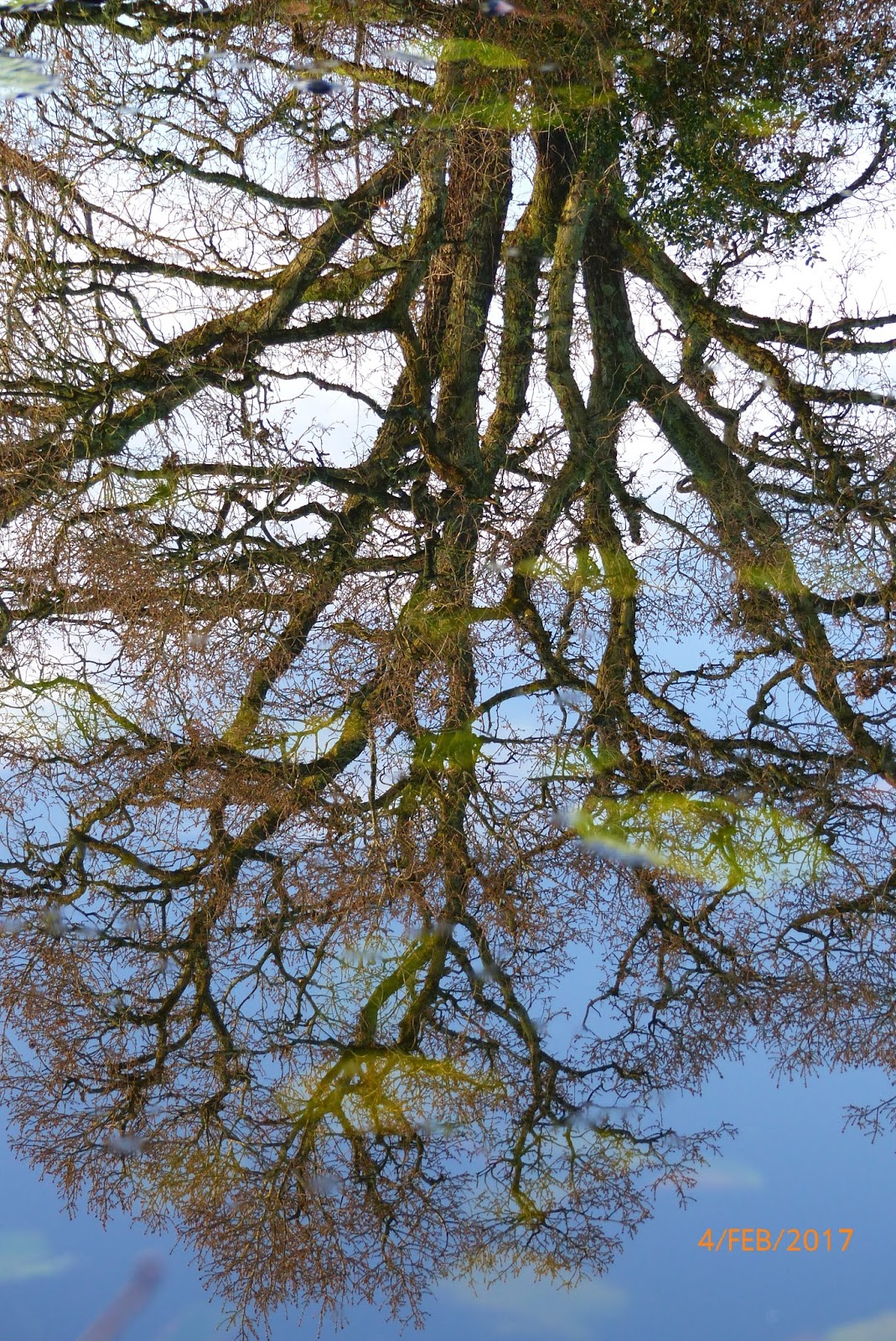
Cornus reflected in the big pond on a frosty morning.

February Reflections in the big pond.
(No the photo isn't upside down!).

Growing near the big pond... Salix chaenomeloides "Mt Aso".

Chimonanthus, wintersweet.

Trillium.

Erythronium.

Fresh new growth of Schefflera brevipedunculata.

  Equisetum arvense, Horsetail was growing in the garden before it even was a garden. Many, if not most, gardeners consider it to be terrible weed but we have been living with it in harmony for almost 20 years, this is a plant that I respect!
 ...Isn't it handsome!
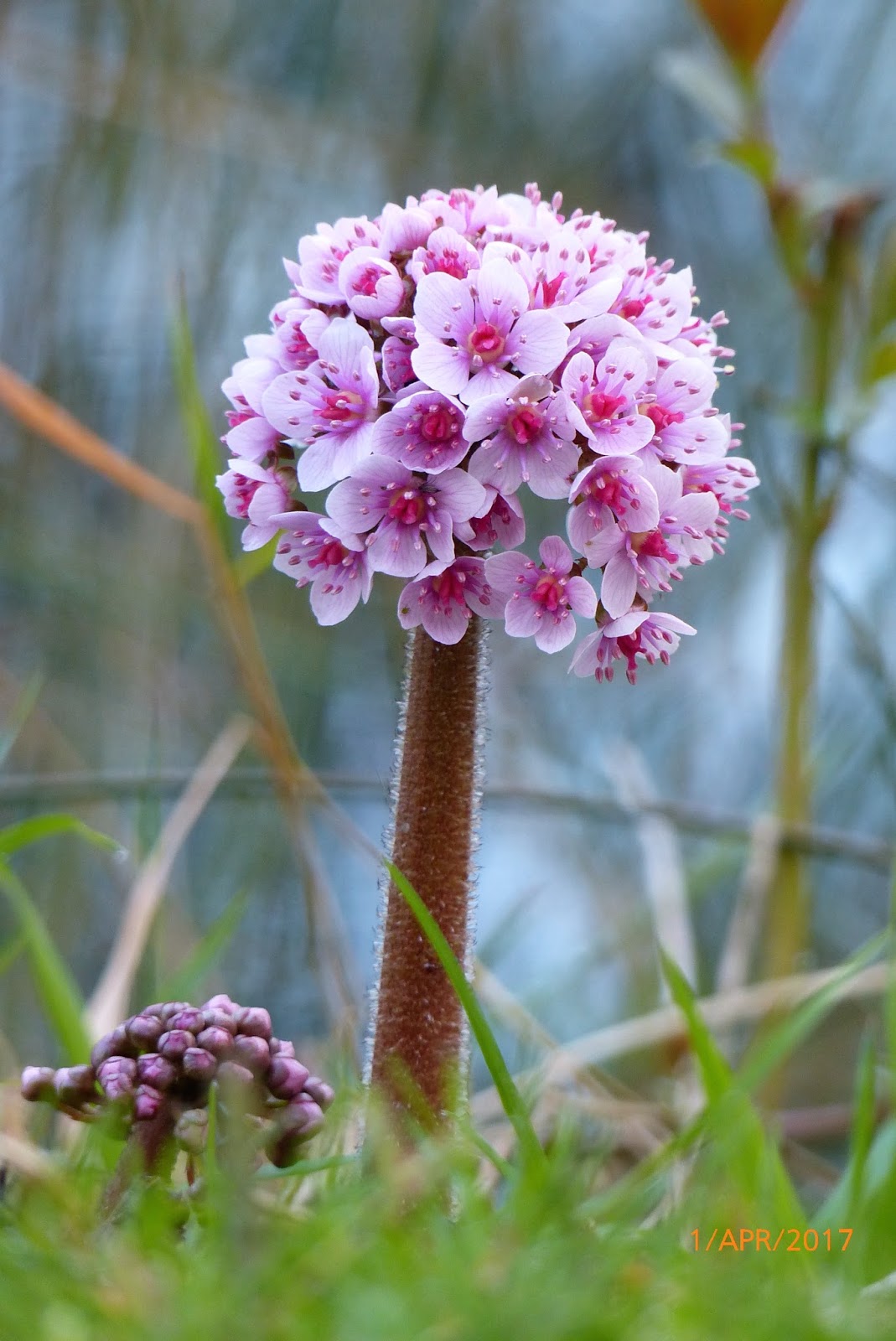
 Darmera peltata.

Magnolia Rostrata.

Native Primrose.

 Tivons turkey and one of the hens on the meadow with primroses.

A hail shower on 25th April.

28 December 2016

Cattle, Sheep, hens... update 2016.


 In January Amber aborted twin calves 6 weeks early. The calves were too young to survive, the vet said their lungs would not have been sufficiently developed. Amber's milk came in though and with no calf to share her milk we found ourselves back with more milk than expected earlier than expected.

Heather and new born calf Daisy, April 14th.
 Then Heather calved in April, Heather had plenty of milk for her calf and for us and with Amber's milk too we had lots for a while.

This photo August 31st, lambs and cattle in five acres.
Out in the field, in about June, Heather stood on one of her teats taking all the skin off the end centimetre! A horrible injury, especially coming into fly season, so Angus hand milked twice a day for most of the year. No one is in calf yet so there should be a lull in activity for a while!

Shemie, Zoe's special pet sheep, spent time everyday this spring being walked about the garden, and through the polytunnels! Then having a supervised graze while Zoe had a supervising laze.
March 14th.

Tivon's Turkey, March 15th.
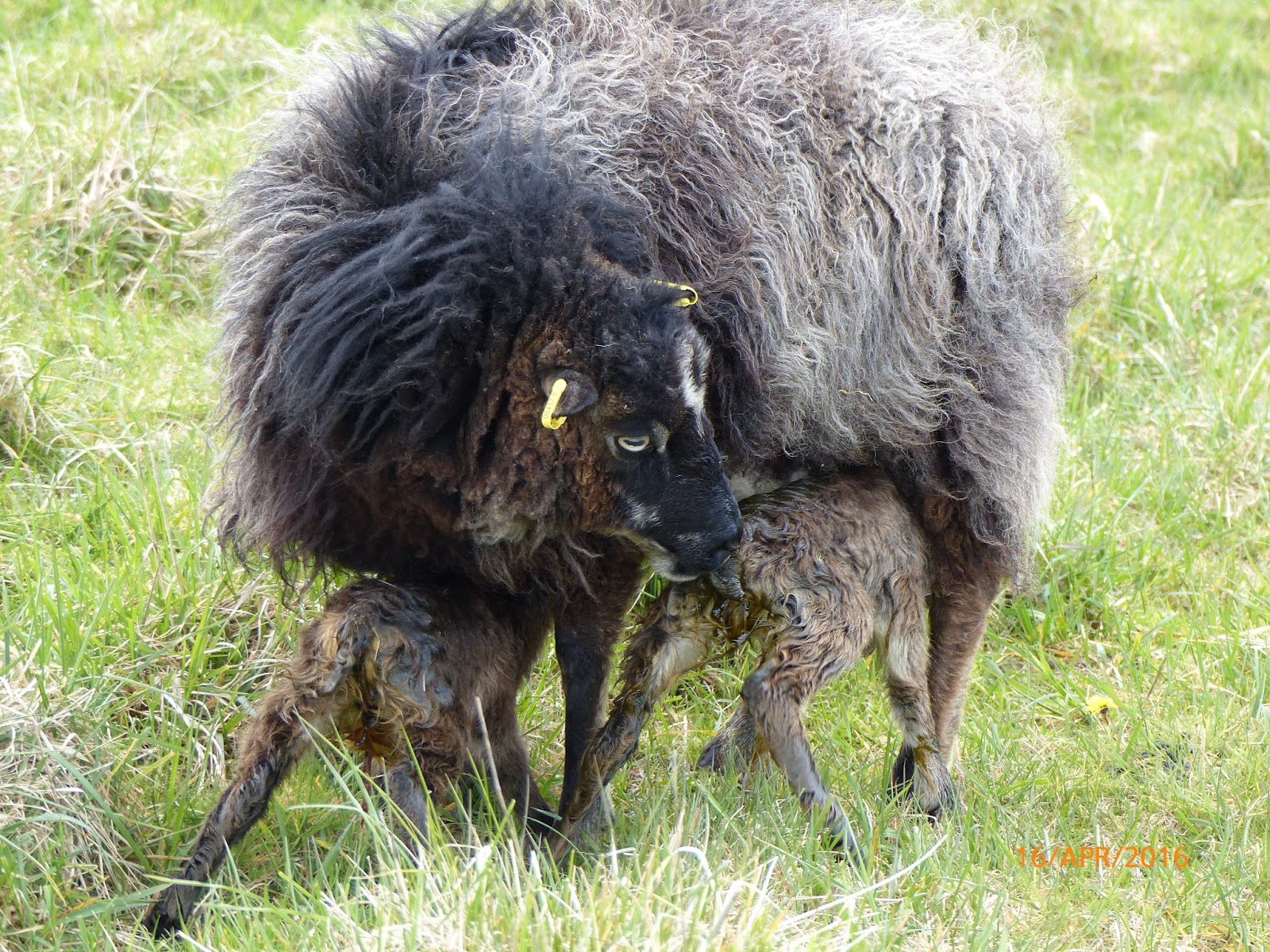
Nettle and her new born ewe lamb Firn, April 16th.

Nettle and her new born twins, April 16th.

Nettle and her new born ewe lamb Firn, April 16th.
Zoe enticing Nettle to come into the barn for the night so the newborn lambs would be safe from the fox. They only spent the first night in the barn.
Thistle also had twins.

 March 26th.
The hens free-ranged the garden until the beginning of June when they went into the fox-proof orchard area for a month or two.

Free range hens have original nests, Alfie and Tivon have egg-hunts all year round!

Daub stalking the pigeons.

He has never caught a pigeon from the roof like this, however the sparrowhawk has caught them in the air and Daub has caught a couple form the ground.

Daub stalking the pigeons, January 12th.

26 January 2015

The Hens and the fox.


 A story as old as time...
 Our hen run that surrounds a small orchard (a dozen fruit trees) is well built, 6 foot high chain link fencing. Usually the hens have free run of the whole garden (excluding the veg. patch) and the hen run is used as a quarantine area or a temporary enclosure when the fox is hungry. This is usually in mid-winter when other prey is scarce or in late spring/ early summer when there are hungry cubs to feed.
 Over 15 years of keeping hens we have found that for most of the year the fox leaves us alone.

 We have lost our old cock and this white boy is having a trial run as the new chief.

Last year we had a dozen cockrels running in the woods, all summer and autumn. We were, ( I was), late culling them and the fox decided to help, he took 2 before we kept them out of his reach in the barn, the rest of the hens were confined to the orchard . He had a taste for chicken though, enough to somehow scale the fence. I went in with a torch at 7.30 one morning to open the nest boxes ... and as I opened the orchard gate I was greeted with feathers, the torch then lighted on a body, and then another. All told, we lost 5 old hens. Miraculously the turkeys and 10 hens, including all the young layers, were spared.

 This photo is from last October. The big white eggs were laid by the turkeys, they lay eggs in the spring and autumn.

We (I) eventually dealt with all the cockrels, You are spared photos, as I had both hands busy all the time! This is Tivon starting a dry pluck, although I do a wet pluck as the feathers fall out so easily after a dip in hot water. The chickens went into the freezer for future roasts, which will be followed by meals of chicken curry and of course wonderful chicken stock.

We have also been getting through the pork mince, making sausages with herbs from the garden and a pinch of salt.

 Tivon is eager to help make sausages even if he is not so eager to eat them.

11 November 2014

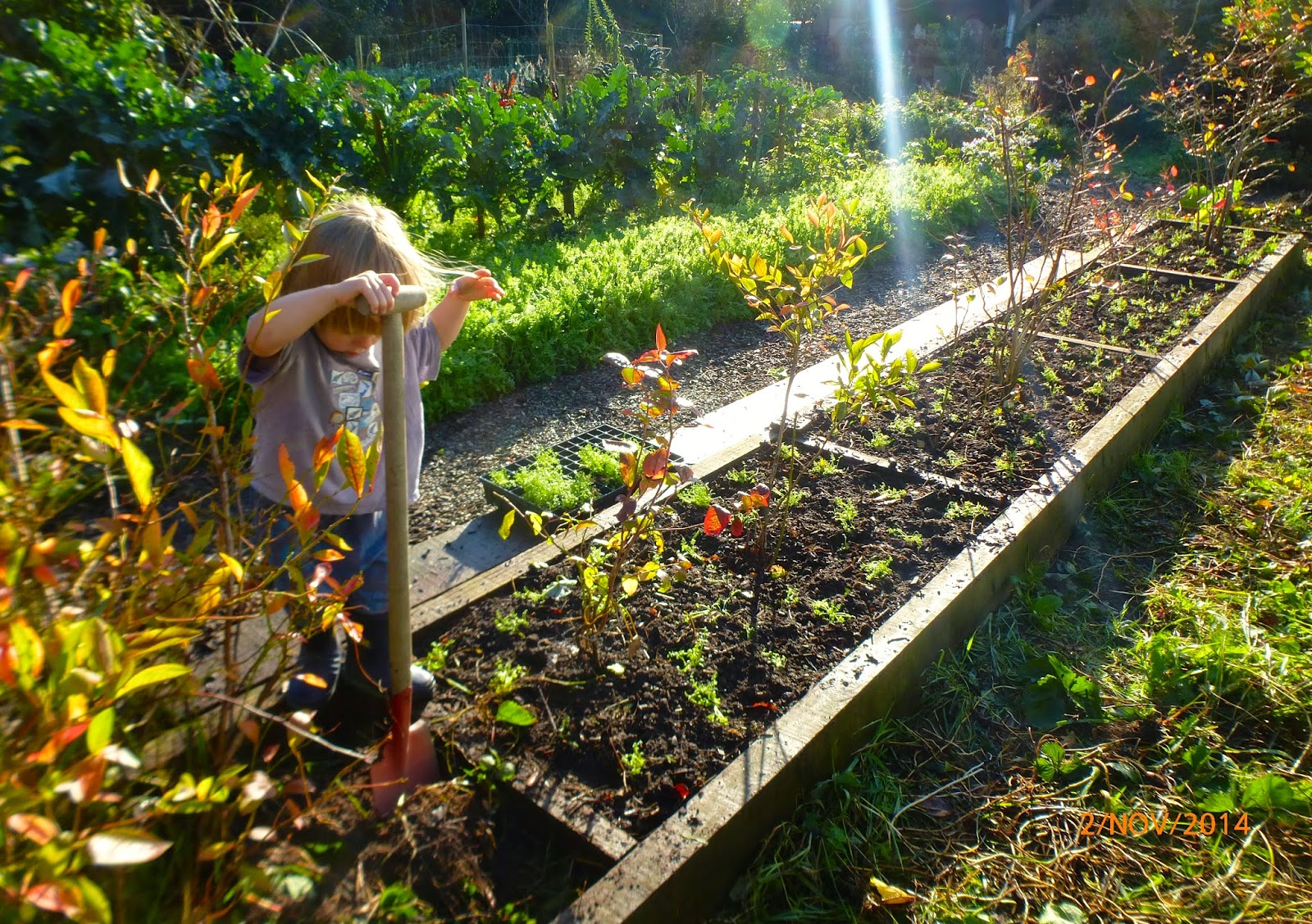
Under planting blueberries and feeding hens.


 I removed the back from our old home-made cold frame a few years ago and it became a blueberry bed instead,  with strawberries planted underneath. The bed runs along the length of the small tunnel where the ground can be wet at times.

 The strawberries cropped well but they did compete for moisture with the blueberries at a time when the ground was at its driest and the plants were their thirstiest. The time came to replace the strawberries with something more compatible .... Poached Egg Plant, Limnanthes douglasii.

 This should work well as it grows vigorously in autumn, it's dense green foliage will protect the soil in winter and it's plentiful roots will help to soak up any excessive rain. It will flower beautifully in May and then die down completely in summer, allowing all available moisture to go to the blueberries when they are fruiting and really need it. 
 
In another corner of the vegetable garden the hens and turkey poults are clearing a bed and path.

From our 16 chicks that we hatched this summer only 5 are hens!

It is also the season for cutting back and dividing the early summer flowering plants near the house.
The garden season has seemed to go on and on this year, however the last few days have been very wet with more rain to come, so I may have to surrender to the indoors for awhile.

05 November 2014

Wattle (our cat) on the beehives.


 Wattle and Daub, our cute kittens, are now nearly 6 months old, Daub has caught young rabbits, a young rat, and a good few mice.
 Wattle has caught mice ...

but hasn't caught any bees ...

... yet!
I trust the bees are well able to look after themselves and Wattle will soon learn, or give up.

Meanwhile, Daub has other ambitions! 

30 October 2014

Tumbling pigeons.


 There were four tumbling pigeons sitting on a perch...

 Then there were three...

 Then two ...

 and then one.

The barn faces south, so this is about mid-day.
 Unique sun dial?